

Showing posts with label Brahms. Show all posts
Showing posts with label Brahms. Show all posts
Saturday, April 1, 2023
Passion Performance Preparation
This post is a glimpse into how I prepare for a performance during passion
season. Tonight the Winnipeg Philharmonic Choir is performing two beautiful
works with the Winnipeg Symphony Orchestra. They are
Te Deum
by Dvorak and
Brahms' Requiem. I
started the day by mixing up my Paska dough while listening to Bach passion
chorales. The Paska receipe comes from Irmgrad Baerg, beautiful accomplished
pianist who I admire greatly. While the dough rises I spend 20 minutes on the
treadmill while simultaneous watching a Te Deum performance on youtube, link
above, and singing along, confirming that I do have it memorized - hooray!
 This is my first time singing this work, in fact prior to rehearsals I had not
even heard it. I must say it is a beautiful composition ; very joyful! Our
performance is very much enhanced by soloists Lara Ciekiewicz and Greg Dahl. I
have heard them both perform many times and performed other works with them and
they add a lot of sparkle and pizazz! Lara is always generous with praise for
the choir which aids in our performance. We especially need this type of
endorsement as our conductor, Yuri Klaz, is not really that impressed with us,
having numerous complaints about our intonation, timing and dynamics. "A right
note at the wrong time is a wrong note" It may interest you to know that a wrong
note at the right time is also a wrong note. Since his visage is more glowering
than glowing when he looks upon us from his podium, we are lapping up any praise
we can from soloists and orchestra to keep us going. Personally, I have prepped
by using www.cyberbass.com in the initial stages for the Te Deum and when that
is mastered I sang along with the video recording above and my score, to
eventually be doing it sans score. Of course, what one can manage in one's own
living room, fortified by red wine, is not always replicated on the stage with
the orchestra blasting all their insturments. The altos are placed very closely
behind the trumpets and trombones which can be quite distracting at times, what
with all the blasting and saliva. Also they are a rather jocular group telling
jokes between blares. For Brahms I did not need to prep with cyberbass or
recordings because it is a work I am very familiar with. I did however have to
spend time doing excercises that gradually crescendo and descrescendo.
Practically every bar of this Requiem has a crescendo and descrendo in it -
which one must pay attention to but we fail at this over and over again. During
rehearsals many of us just blast right through 2 bars, then go subito piano. It
is difficult to maintian this constant rise and fall but it is what Brahms is
all about. At last night's dress rehearsal I think we mostly managed this
correctly. When you come tonight I would be interested to hear your feedback on
this point. One of the highlights is to see how much our conductor basks on the
podium to the sounds coming from the orchestra. There is a beautiful dynamic
between orchestra and Yuri that is satisfying to watch. He is really in his
element jabbing his baton and casting magic spells. The musicians are showing
him respect and a spirit of collegiality abounds. This is far from always the
case and it is thrilling when it happens!
This is my first time singing this work, in fact prior to rehearsals I had not
even heard it. I must say it is a beautiful composition ; very joyful! Our
performance is very much enhanced by soloists Lara Ciekiewicz and Greg Dahl. I
have heard them both perform many times and performed other works with them and
they add a lot of sparkle and pizazz! Lara is always generous with praise for
the choir which aids in our performance. We especially need this type of
endorsement as our conductor, Yuri Klaz, is not really that impressed with us,
having numerous complaints about our intonation, timing and dynamics. "A right
note at the wrong time is a wrong note" It may interest you to know that a wrong
note at the right time is also a wrong note. Since his visage is more glowering
than glowing when he looks upon us from his podium, we are lapping up any praise
we can from soloists and orchestra to keep us going. Personally, I have prepped
by using www.cyberbass.com in the initial stages for the Te Deum and when that
is mastered I sang along with the video recording above and my score, to
eventually be doing it sans score. Of course, what one can manage in one's own
living room, fortified by red wine, is not always replicated on the stage with
the orchestra blasting all their insturments. The altos are placed very closely
behind the trumpets and trombones which can be quite distracting at times, what
with all the blasting and saliva. Also they are a rather jocular group telling
jokes between blares. For Brahms I did not need to prep with cyberbass or
recordings because it is a work I am very familiar with. I did however have to
spend time doing excercises that gradually crescendo and descrescendo.
Practically every bar of this Requiem has a crescendo and descrendo in it -
which one must pay attention to but we fail at this over and over again. During
rehearsals many of us just blast right through 2 bars, then go subito piano. It
is difficult to maintian this constant rise and fall but it is what Brahms is
all about. At last night's dress rehearsal I think we mostly managed this
correctly. When you come tonight I would be interested to hear your feedback on
this point. One of the highlights is to see how much our conductor basks on the
podium to the sounds coming from the orchestra. There is a beautiful dynamic
between orchestra and Yuri that is satisfying to watch. He is really in his
element jabbing his baton and casting magic spells. The musicians are showing
him respect and a spirit of collegiality abounds. This is far from always the
case and it is thrilling when it happens!

Friday, April 17, 2020
Social Distancing and the Choral Life

Besides the loss of not being able to rehearse together with others is the loss of concerts I rehearsed for but could not perform. Their dates passing without the requisite concert week marathon rehearsals preceding them and no dressing in performance wear meeting backstage in nervous anticipation. Among these were Berlioz Messe, Beethoven Mass, Dvorak Te Deum all with the Winnipeg Symphony Orchestra, a collaboration I treasure. In addition was the much anticipated and so beloved Brahms Requiem with the First Mennonite Church Choir.
Some of these concerts are cancelled, some postponed.
One would think I had used my rehearsal free evenings to look at the scores and prepare for postponed concerts but one would be wrong. The singing I have done, much too loudly, has been belting out tunes with Elton John and ABBA and I do a pretty good rendition of Brown-Eyed Girl.
My concert scores have remained closed receiving only glares as I pass them by.
Then came the unexpected. My work-life mandated a Wellness Morning as part of a professional development day. We were to watch videos sent by our boss, reflect on them, and choose a wellness activity in a mindful purposeful way. This is easier said than done. What to do? Can't go for a manicure or a massage. Could go for a walk but this is part of my daily routine already. A helpful sister suggested I watch Judge Judy since hearing her call out, "idiot" can sometimes be as satisfying as a massage. I realized that I would rather spend my mornings working than relaxing. I am a work first, then relax sort of person.
In the midst of the stress of deciding how to practice wellness Haydn and Brahms called out to me and I got them off the shelf. I laid out some of the scores of music I will, hopefully be performing in the next concert season.

Beethoven called out the loudest so he and I headed down to the TV where I pulled up a performance of the Mass in C. This was not as easy as it sounds. I am fussy. I wanted one where I could watch the singers and the conductor, and I wanted them to be good. Finding none with Herbert van Karajan, my go-to YouTube conductor, I opted for this one out of Germany https://www.youtube.com/watch?v=4UzITmh5BD0 I usually choose European choirs. The reason being they are most likely to sing without score in hand. This choir, sadly did not. Nor did the soloists. Still I didn't want to waste anymore time finding the "just right" sing along choir.
As the opening Kyrie began I became distracted by the treadmill visible from the corner of my eye, so I got on it and proceeded to sing and walk simultaneously. The treadmill hummed in the wrong key, loudly, and my huffing and puffing did not allow for breath control required in most movements. This was less than ideal for rehearsal purposes, but since the performance of this will be way in the future it sufficed.
Some pleasant surprises. In spite of not rehearsing for weeks my vocal range has not suffered and my memory of the piece was solid. Coming across my various pencil markings made me smile and I took heed of them: "tempo" "torturned soul" "NN" (there are 2 n's in Osanna), the circle around the time signature 12/8 of the Agnus Dei and the ever present arrow pointing up indicating to not sing flat. ( Oh dear, the cardinal sin that requires a blogpost of its own.) When at last we reached the Dona Nobis pacem, the anguished demands and cries for peace, my soul was moved. Beethoven was writing this during the Napoleonic wars therefore his cries have gravitas.
After the applause and the soloists and conductor had taken their bows I got off the treadmill feeling grateful to Beethoven and all performers who have kept his music alive over the years.
Did I derive meaning from choral music without my choir? yes. Is it enough? No. I yearn to gather with fellow choristers and look forward to the first post COVID-19 rehearsal. What a day of rejoicing that will be!
Monday, March 13, 2017
Schubert and Brahms
 |
| Franz Schubert |
Klaz is primarily a choral conductor but has conducted the WSO on several occasions.
It was heartwarming for this chorister to see that the musicians behaved as though they had respect for Yuri's musical ideas and a genuine warmth seemed to emanate between the orchestra and conductor.
I have seen many conductors mount the podium and gaze out over this orchestra, I have seen more than one wilt and be meekly led by the concert mistress herself. On the other hand I have shaken in my boots as tongue lashings occurred from podium to timpani and condescending remarks were hissed out at various instrumental sections.
The rehearsals for this concert had none of that. Respect for the music and one another was the hallmark of these rehearsals. Instruction and response seemed natural.
This conductor even handled the union master's annoying penchant for stopping rehearsals at just the wrong time with good humour.
Even if this respectful relationship had not been the case I feel the music would have smoothed over any difficulties.
The glorious pieces we performed, the we being the Winnipeg Philharmonic Choir, are not that often performed here in Winnipeg, and in fact it was my first time for either piece! Given my age it may also be the last, which is truly a sad thought!
We sang the Brahms' Nanie and Schubert's Mass in Eflat. Recordings of the pieces are linked to their titles. The Brahms piece is a secular piece written for the funeral of a friend. The text is a Friedrich Schiller poem. (same poet who wrote the Ode to Joy text) It is written and was performed in the German language but here is the English translation of the text.
Just reading the text I can hear that it was meant for Brahms!
The Schubert mass, his last one, and in fact he died before it was first performed, is much more difficult to sing than his earlier ones. I was quite surprised when I came to them that the fugues required a fair bit of work and were trickier than one would expect of Schubert. This made rehearsals fun, and provided great satisfaction when they appeared light and fresh at performance time - at least I hope so.
Schubert did not write much for the soloists to do. He gave them only quartet /trio work and usually meshed them into a choral piece. This meant that neither my voice nor body received much of a rest during performance, as there were no arias where a chorister could rest up!
The Philharmonic choir, most notably the alto section, was very welcoming to associate singers and I appreciate them for it. I have been singing as an associate with this choir since 1980. Back then they were known as The Winnipeg Symphony Philharmonic Choir and had their rehearsals at the concert hall with a grand piano. Now they rehearse in a crowded high school theatre with an electronic keyboard and yet manage to yield good results! Bravo!
Schubert did not write much for the soloists to do. He gave them only quartet /trio work and usually meshed them into a choral piece. This meant that neither my voice nor body received much of a rest during performance, as there were no arias where a chorister could rest up!
The Philharmonic choir, most notably the alto section, was very welcoming to associate singers and I appreciate them for it. I have been singing as an associate with this choir since 1980. Back then they were known as The Winnipeg Symphony Philharmonic Choir and had their rehearsals at the concert hall with a grand piano. Now they rehearse in a crowded high school theatre with an electronic keyboard and yet manage to yield good results! Bravo!
Tuesday, February 26, 2013
Requiems 2013
 |
| Wolfgang |
 |
| Johannes |
In the Passion season of 2012 I sang The Brahms Requiem with the WSO and Mozart Requiem with my church choir. This season it will be the reverse. Since the church choir is doing the Brahms we have been rehearsing for two months already whereas we have not had one day of Mozart rehearsal. Both will be performance ready by the Easter weekend. Since both are so fresh to my voice and brain and so loved by my heart, the rehearsal stage will be easy! Some unique aspects will be that we will do the 4 hands piano version of the Brahms instead of orchestra. Although Brahms did transcribe his orchestral version for two pianos it was done mostly for commercial reasons as more and more people were enjoying playing orchestral works on their pianos at home. Now here, too, I feel that money is driving this decision: two pianos will be cheaper than the strings to have the pianos will most likely be cheaper - it better be as I can't think of any other reason to remove the strings from this work, I have performed it with organ one time and it did not satisfy.
I have written about both of these Requiems in previous posts so don't want to repeat myself too much. For an alto there is no question the Brahms is more enjoyable. Johannes, as always, celebrates and honours the inner line by giving us beautiful moving and haunting lines to sing. Mozart uses us as filler and keeps us humble. Mozart writes for sopranos.
Other differences in the Requiems is that Mozart includes the traditional Dies Irae while Brahms does not even give us a peek of hell. Brahms is all about comfort, and who better to provide comfort than the alto. (You know, I have to speak like this as my blog is "an Alto writes about her choral life.")
The exciting thing about doing the Mozart will be that we will be working with Jane Glover who is a Mozart expert. I look forward to hearing her take on a work that she is so intimate with. I have posted about Ms. Glover earlier on this blog as we sang the St. John's Passion with her two years ago. She runs a tight ship and I have an appreciation for that trait in a conductor. She is the British born woman who conducts an accomplished baroque chorus out of Chicago. She is the author of
Mozart's Women: His Family, His Friends, His Music a book I much enjoyed.
I will write more as rehearsals progress.
Monday, April 2, 2012
Mickelthwate in Harmony with Brahms
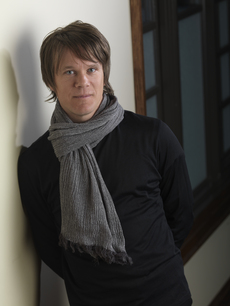
The first surprise is how excited he is about Brahms! He said it is in his top 4 favourite list. The first change he makes is in our opening bars. He wants it much slower than we have been rehearsing it and with much more patience and emotion. We repeat the opening bars several times until it is perfected . He really brings out the romantic elements of the piece, which of course is the whole point of Brahms!! Brahms is forever yearning and it was nice to have our performance conductor keep reminding us to "be patient, take your time, take lots of time." Usually conductors are saying "even though you are singing piano you must keep the tempo" or "don't slow down just because it's a low dynamic" etc, etc. so we are used to our internal tickers moving us along but here, with Alexander Mickelthwate we were given permission to sink into it and take all the time we need to sing with feeling, "Selig sind die da Leid tragen".
Another wonderful surprise is that he had us change many of our vowel sounds. We had rehearsed with a straighter brighter vowel and - hip hip hooray - the Maestro wants us to use a rounder vowel. Not too much "a" in Selig. The rounder vowel suits us much better!
Surprise number three was that when the Altos sing out the theme, "Herr, du bist Wurdig" he did not ask for a lighter sound as some conductors request. He wanted a robust, dark alto sound, which of course is what we altos do best so we are in perfect agreement. He also did not seem surprised that the Altos were given so many themes to sing but conducted us as if it were our natural right to belt out the significant texts!
Alexander gave full permission for the Altos to be Altos and to deliver all that Brahms gives us. I could feel Brahms smiling too!
Now on to 3 rehearsals with the orchestra and then performance on Saturday Night at the Centennial Concert Hall.
Thursday, March 15, 2012
Beloved Brahms

In the Requiem Brahms presents the alto chorister with some of the most beautifully haunting lines to be found in choral music. He lets them sing several passages alone! He gives them a range of notes from the G below middle C to the E flat on top of the treble clef. He has faith in the alto to navigate this wide range.
The Brahms Requiem is a work that spoke to people from the very beginning. At it's premier in Bremen, Good Friday April 10th 1868, it was a huge success. It is reported that tears were flowing during the 4th movement and the audience left the cathedral with feelings of "awe and grace." (from Johannes by Swifford)
In fact, the Requiem spoke to people even prior to it's premier.
" In August 1866 Brahms was in Baden-Baden with Clara (that being Schumann) and her children.He finished the requiem except for the 5th movement which was an afterthought following the premiere.
I was touched by a reference to the Brahms Requiem in a book by Oliver Sacks called Musicophilia, Tales of Music and the Brain. In the following passage the writer had lost a good friend (Lenny) to death but had never mourned this.
In fact, the Requiem spoke to people even prior to it's premier.
" In August 1866 Brahms was in Baden-Baden with Clara (that being Schumann) and her children.He finished the requiem except for the 5th movement which was an afterthought following the premiere.
On a memorable September afternoon at Clara’s house he played and sang through the whole piece. Clara noted in her journal “Johannes has played me some magnificent numbers from a German Requiem…I am most moved by the Requiem: it is full of thoughts at once tender and bold. (p.309 Johannes)
I was touched by a reference to the Brahms Requiem in a book by Oliver Sacks called Musicophilia, Tales of Music and the Brain. In the following passage the writer had lost a good friend (Lenny) to death but had never mourned this.
The performance of Brahms Requiem had a powerful effect on me. I went to Berlin thinking I would write about David Hume there..but..as the waves of music poured over me- listening with my whole body, it seemed, and not just my ears - I realized I was going to have to write about Lenny instead. I had been carrying Lenny's death in a locked package up till then, a locked frozen package that I couldn't get at but couldn't throw away either..It wasn't just Lenny that was frozen; I had too. But as I sat in the Berlin Philharmonic Hall, and listened to the choral voices singing (Brahms) something warmed and softened in me. I became, for the first time in months, able to feel again.
I feel this power of Brahms at every rehearsal and am usually on the verge of being overwhelmed by it during performance. Two more rehearsals before we work with Alexander Mickelthwate on it. I have performed the Requiem many times but this will be my first with Mickelthwate. I am expecting him to be his usual non-demanding amiable self. Performance at the Winnipeg Concert Hall, on the Saturday between Good Friday and Easter.
I feel this power of Brahms at every rehearsal and am usually on the verge of being overwhelmed by it during performance. Two more rehearsals before we work with Alexander Mickelthwate on it. I have performed the Requiem many times but this will be my first with Mickelthwate. I am expecting him to be his usual non-demanding amiable self. Performance at the Winnipeg Concert Hall, on the Saturday between Good Friday and Easter.
Subscribe to:
Posts (Atom)